Soil and Soil Structure
Assess compaction, infiltration, drainage, organic matter and root-zone soil conditions.
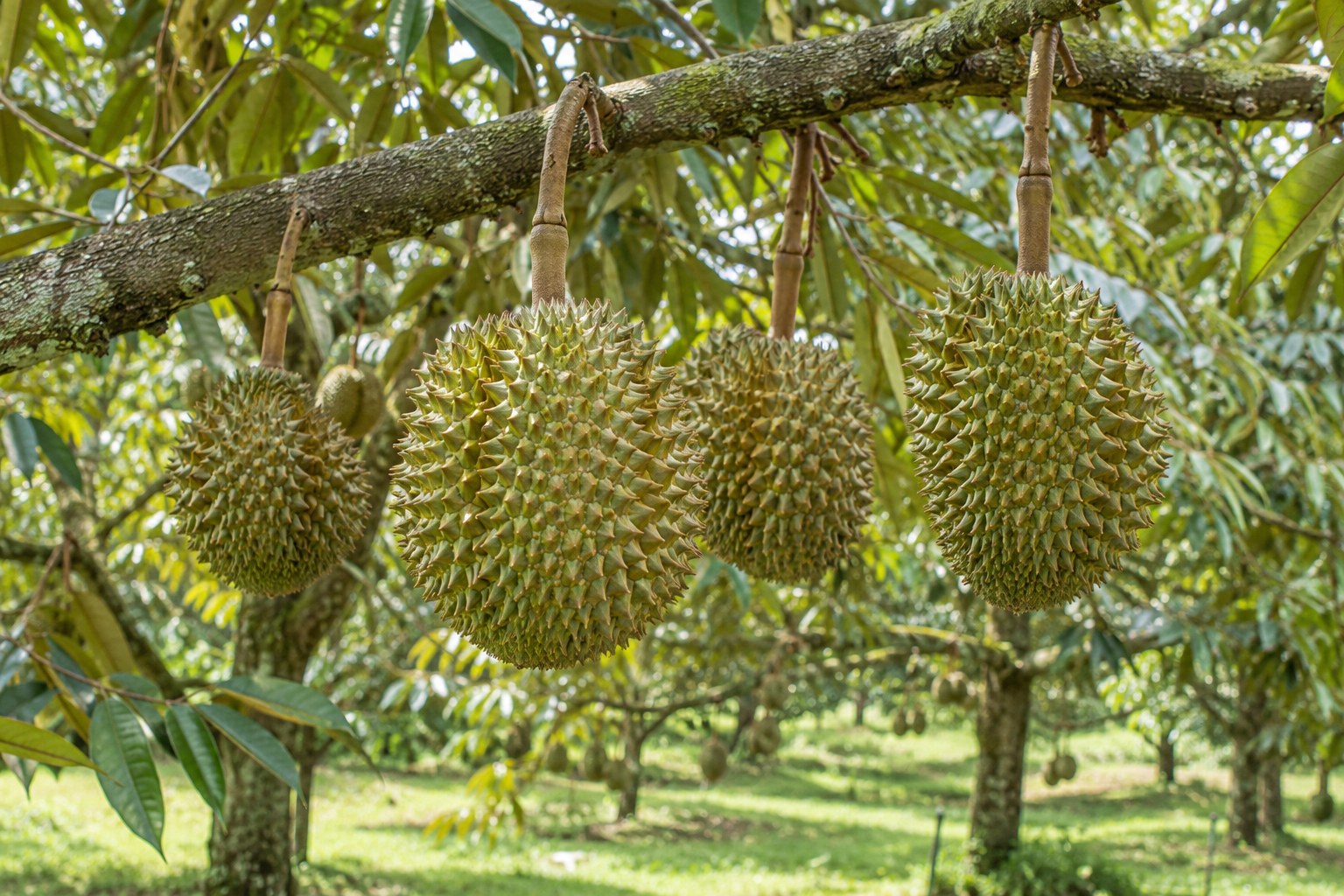
J.KAY approaches durian management by considering the relationship between soil, water, roots, tree condition, leaves, canopy, crop load and management history before developing an appropriate field approach.
Soil • Roots • Trees • Leaves • Recovery • Post-Harvest Management
FIELD ASSESSMENT
Visible symptoms may result from several interacting factors. Assessment should connect field conditions, soil, roots, plants and management history.
Assess compaction, infiltration, drainage, organic matter and root-zone soil conditions.
Review waterlogging, uneven moisture, insufficient water and irrigation patterns.
Assess fine roots, new root development, root distribution and limitations.
Inspect wounds, excessive moisture, abnormal bark and other symptoms.
Evaluate canopy balance, primary and secondary branches, dry branches and air movement.
Review leaf colour, size, young and mature leaves, leaf drop and symptom patterns.
Consider root condition, canopy, tree age, crop load and overall readiness.
Assess tree condition after carrying fruit, including leaves, roots and recovery.
Review tree readiness, water conditions and management before flowering.
Assess fruit number, tree balance, branch strength and the tree’s ability to support the crop.
Differentiate physical, environmental, nutritional and biological factors.
Review crop residues, irrigation, fertilizer use, previous treatments and important seasonal events.
J.KAY DIAGNOSTIC APPROACH
A structured process helps separate evidence from assumptions.
Clearly identify the problem, timing and distribution.
Compare normal and affected areas while assessing soil, water, roots and plants.
Avoid conclusions based on one visible symptom or a product name.
Measure or collect additional samples when needed.
Define objectives, comparison areas and follow-up indicators.
Address major constraints first, then monitor real field changes.
SYSTEM VIEW
The primary constraint may sit below ground, in the plant structure, or in field management.
Assess structure, compaction, drainage, infiltration, pH, EC, moisture and organic matter.
Inspect fine roots, new root development, distribution and possible limitations.
Evaluate leaves, canopy, branches, trunk, overall condition and crop load.
PRODUCTS AS PART OF THE SYSTEM
Not every product is required in every field. Selection should depend on the problem, objective and actual site conditions.
FIELD PROJECT / MANAGEMENT FOCUS
After harvest, assess the tree and root system before the next cycle: assess the tree → assess soil and roots → manage the soil system → support recovery → follow new root and leaf development.
Assess → Diagnose → Plan → Trial → Follow Up → Refine

DEVELOPMENT PATH
Symptoms → Field Assessment → Soil & Root Check → Data Collection → Differentiate Causes → Management Plan → Follow Up.
CONSULTATION
Tree Age • Harvest History • Soil Condition • Water System • Leaf Symptoms • Trunk-Base Photos • Root Photos if Available • Management History