
Soil and Soil Structure
Assess compaction, drainage, infiltration, organic matter and overall soil condition.
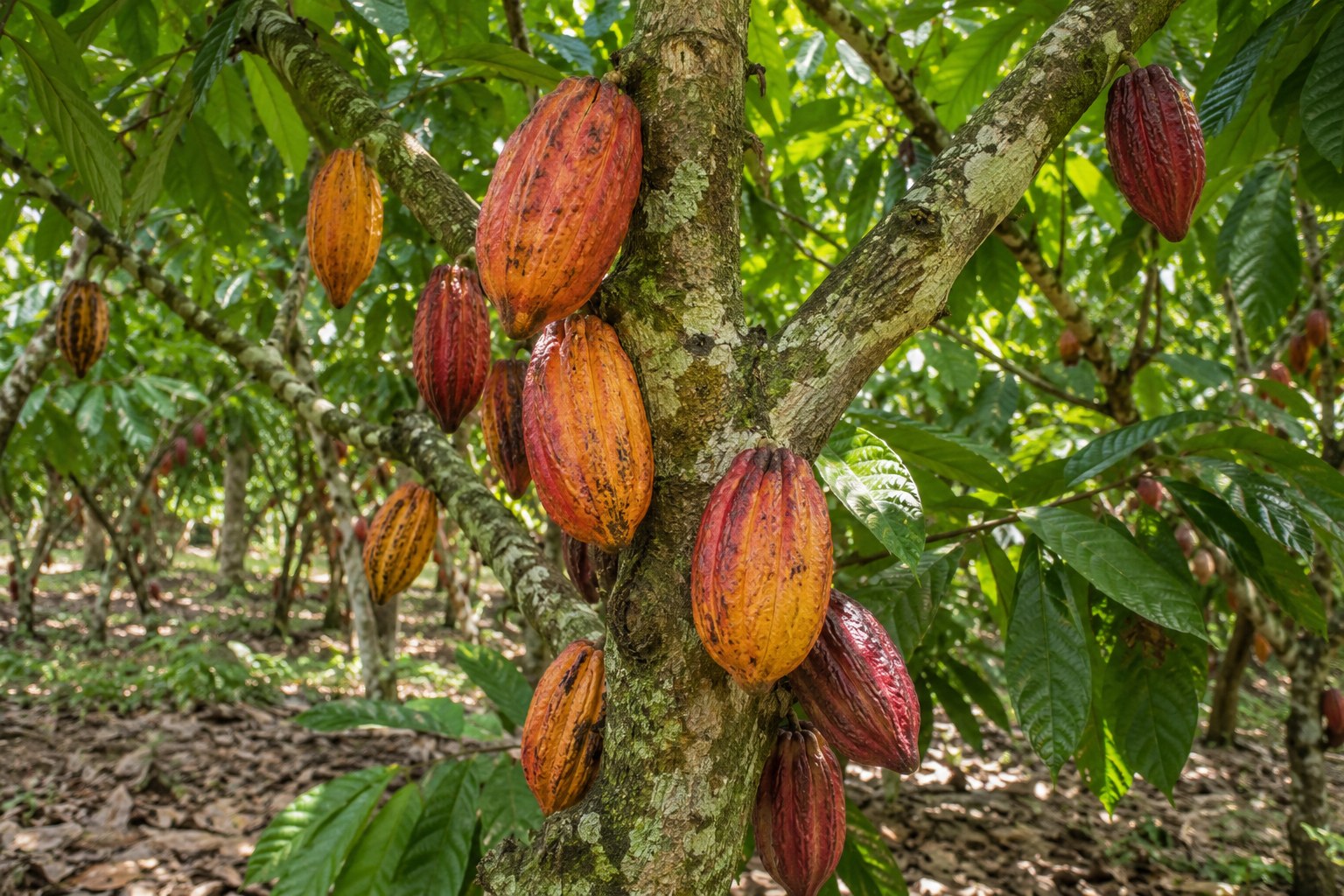
J.KAY approaches cacao management as an integrated system. We begin by understanding field conditions, soil, water, root systems, tree condition, canopy, flowers, pods and previous management before developing an appropriate field approach.
Soil • Roots • Trees • Flowers • Pods • Field Management • Production Development
FIELD ASSESSMENT
Visible symptoms may result from several interacting factors. Assessment should connect field conditions, soil, roots, plants and management history.
Assess compaction, drainage, infiltration, organic matter and overall soil condition.
Review waterlogging, insufficient water and the consistency of moisture around the root zone.
Assess root distribution, fine roots, new and older roots, and possible limitations caused by soil or water conditions.
Evaluate the balance of light and shade according to tree age and field conditions.
Inspect trunks, primary branches, secondary branches and water shoots.
Assess canopy density, ventilation and moisture accumulation within the tree.
Review leaf colour, size, new flushes and patterns of abnormal symptoms.
Assess flower location, flowering intensity, pod set and continued pod development.
Consider possible relationships with water, tree condition, roots, weather and management.
Observe lesion characteristics, location, distribution and related environmental conditions.
Inspect wounds, bark, branch dieback, bore holes and other visible damage.
Review unharvested pods, crop residues, harvest practices and overall field hygiene.
J.KAY DIAGNOSTIC APPROACH
A structured process helps separate evidence from assumptions.
Clearly identify the problem, timing and distribution.
Compare normal and affected areas while assessing soil, water, roots and plants.
Avoid conclusions based on one visible symptom or a product name.
Measure or collect additional samples when needed.
Define objectives, comparison areas and follow-up indicators.
Address major constraints first, then monitor real field changes.
SYSTEM VIEW
The primary constraint may sit below ground, in the plant structure, or in field management.
Assess structure, compaction, drainage, infiltration, pH, EC, moisture and organic matter.
Inspect fine roots, new and older roots, distribution, depth and possible limitations caused by soil or water.
Evaluate tree strength, canopy, leaves, branches, trunk, flowers, pods and the distribution pattern of symptoms.
PRODUCTS AS PART OF THE SYSTEM
Not every product is required in every field. Selection should depend on the problem, objective and actual site conditions.
FIELD PROJECT / MANAGEMENT FOCUS
J.KAY is developing a field-based working approach with growers in Thong Pha Phum, focusing on field assessment, problem analysis, planning, trial application, follow-up and field-based evaluation.
Assess → Diagnose → Plan → Trial → Follow Up → Refine
DEVELOPMENT PATH
Future project development may connect production quality, dried cacao beans, by-product utilization, processing and market development. One direction is to explore practical uses for materials such as cacao pod husks.
CONSULTATION
Tree Age • Soil Condition • Water System • Symptoms • Management History • Field Photos